What legal obligations must you fulfill when storing records?
The preparations for proper record storage are made more difficult by the fact that you have to satisfy several laws and authorities at once. Here are some of the laws and regulations that deal with the storage of documents:Internal Revenue Code (IRC) Section 6001 - Recordkeeping Requirements
The Internal Revenue Code is central to US tax law and not only prescribes how taxes and duties are calculated and collected in the US, but also how long and under what conditions the basis for this must be kept. IRC Section 6001 not only prescribes what are generally considered files and documents requiring retention, but also that these must be logically organized and kept readable at all times during storage.General Corporate Recordkeeping and the Uniform Commercial Code (UCC) - Retention Periods
Besides tax law, US commercial law, which regulates the business activities of merchants and corporations, also has a lot to say about the storage of files and documents. Private individuals who do not run their own business are rarely affected by corporate laws. Note, however, that you can already be considered a sole proprietor by the IRS when occasionally selling items on the internet. Commercial laws dictate that documents must be kept safely and in an orderly manner. This includes that the room or building in which the documents are stored is protected against destructive impacts such as fire, water, and moisture. It must also be guaranteed that the writing on the paper used does not fade. The documents must be in such a condition that official auditors can inspect them at any time.IRS Revenue Procedure 97-22 and Sarbanes-Oxley Act (SOX) for electronic records
These are regulatory standards from the IRS and the federal government that prescribe which measures must be taken during record storage. State authorities then pass similar regulations on to taxpayers. These rules primarily concern electronic data storage, but also the receipts that form the basis of tax calculation, income tax, and sales tax.US Data Privacy Laws (e.g., CCPA, HIPAA, GLBA)
Data privacy laws are some of the strictest laws dealing with file and data storage, introduced across various states and federal sectors to protect consumer and patient information. The regulations dictate how personal data, both physical and digital, must be kept and stored. In doing so, these privacy laws also place particularly great value on the secure disposal of the relevant data.How long do you have to keep files and documents?
The different laws and regulations have in common that they all prescribe professional storage that requires representatives of the authorities to be able to inspect them without any problems at any time. When it comes to the prescribed storage time, however, these vary. To make things a bit easier for those affected in this bureaucratic jungle, the rule is that the shortest prescribed storage time is considered sufficient. Here is an overview table of the most common documents and files, and how long they must be kept at least according to the different regulations:Retention obligations for private individuals
The retention period for private individuals begins at the end of the calendar year in which the invoice was issued or the contract was signed.Retention obligations for businesses
The retention period for companies and freelancers/self-employed persons begins with the expiration of the calendar year in which the last entry was made in the commercial ledger, the inventory was drawn up, or the opening balance sheet or the annual financial statements were determined. For commercial or business letters, the period begins at the end of the year in which they were sent. For accounting vouchers, the end of the calendar year in which they were issued applies.Who could benefit the most from the external archiving of documents?
The larger the accounting department, the greater the space requirement for the accumulation of receipts and invoices. It does not depend on how large the company is, but how the accounting is organized and how many individual invoices and receipts are issued or received in the daily business operations. Those who receive and create many of the invoices digitally will need fewer file binders and shelf space than companies that rely on paper receipts and physical documentation. New systems like electronic receipts also reduce paper accumulation in the office. The tradespeople and companies in the US that still rely on the bookkeeping of paper receipts and benefit the most from an external storage of files include:- Architects
- Construction companies
- Retail companies
- Research institutes
- Healthcare sector, including homeopathy
- Attorneys
- Tax consultants, business advisors, and accountants
How can the right size for a document storage facility be determined?
To calculate the need for storage space, you must decide between several storage options. For one thing, you can store yours on shelves or in file cabinets specifically designed for this purpose. As a rule, you must provide the shelves and trays yourself, which you then set up in the self-storage facility. Also note the special ISO 11799 regulations that you must comply with for these open solutions. More on that below. Another possibility is offered by crates, boxes, and cartons that can easily be stacked high and therefore guarantee maximum space utilization. Here it is important to note that cardboard only has a limited lifespan and perhaps does not offer the best protection for your files, especially if you want to keep them in it for ten years. Crates and storage boxes with lids offer a safe and dust-free storage solution here. Often you can buy or even rent these from professional full-service providers. Plastic boxes also make it easier to determine the required size of the storage area. You can fit about six wide or ten narrow binders in a rented crate measuring 24 x 16 x 15 inches. Should you choose banker boxes, these come in the size 16 x 13 x 13 inches and hold 5 wide file binders. To calculate the space for shelf storage, you should take a look at the number of your file binders. A standard letter/legal binder measures 12.5 (H) x 11 (W) x 3 (D) inches. You can insert between 600 and 800 sheets in it. You can then accommodate about 12 binders per 3 feet of shelving. Regardless of whether you want to store your binders on shelves, in file cabinets, or in boxes, you must also consider the following:- How often do you need to inspect the files?
- Must the file storage be regularly expanded or extended due to new binders, or do you want to rent a larger storage area right away to avoid further moves?
- How do you best organize your file archive so that you can find everything immediately as needed?
Who has access to your file archive?
While you always keep track of who has access or insight into the archive when keeping your documents in your own house or office, the question arises with external storage: Who besides me can inspect the files? Record storages and archives contain sensitive information. These generally concern not only your own company, but everyone who contacts you and does business with you. Therefore, it is important that you inform yourself about the security at your storage facility before outsourcing your documents externally. With professional self-storage and full-service storage providers, fundamentally only you and the persons authorized by you have access to your documents. If you have chosen self-storage, you should ensure that you barricade your file archive with a secure lock. Furthermore, you should ensure that your landlord uses security logs. These should record who entered the area of your archive, when, and for what reason. Ideally, these details should be viewable for you at any time, e.g., on an online portal. In the case of full-service storage, this security protocol is already commonplace. In addition, with this form of warehousing, the general public has no access to the storage units.The perfect solution for storing files to avoid damage
When choosing a self-storage or full-service solution, you must pay particular attention to ensuring that the provider also offers the professional storage facilities that are suitable for storing paper. Paper produced nowadays generally has a lifespan of at least 50 years. The prerequisite, however, is that it is kept under appropriate conditions. Therefore, find an external archiving facility that is aware of the correct storage methods for papers and documents or even specializes in it. It is not only the paper that is threatened by decay, but also the print. Therefore, avoid premises with excessive humidity that are exposed to large temperature fluctuations and UV rays from sunlight. The International Organization for Standardization (ISO) has published a standard that determines the optimal storage of archival material. According to ISO 11799, collections consisting of paper should receive the following storage conditions:- Temperatures should not exceed 70°F.
- The relative humidity should be between 30 and 55%.
- Storage facilities should not be in the immediate vicinity of industrial plants that emit harmful gases and dust. If this cannot be avoided, special filter systems should regulate the air.
- Storage rooms must be equipped with special fire protection.
- Special safety measures, such as raised shelves/pallets, leak detectors, and sealed windows/doors must be present in areas with an increased risk of environmental disasters like flooding.
How much does the storage of documents cost?
The costs for the external storage of your file archive depend on several factors:- The size of the rented area
- The larger your archive, the more square footage you need. As a rule, however, the price per square foot becomes cheaper the more space you rent.
- The length of the lease agreement
The location of your archive
Self-storage in major US cities like New York, Los Angeles, Chicago, Houston, or Phoenix are generally more expensive to rent than in smaller cities like Austin or Waco. In New York, the storage rent for 10 sq ft starts at about $100 per month. In Austin, the same area costs about $70 per month.Additional services and ancillary costs
Besides the actual rent, further costs could arise for e.g., transport, security, and climate control of your storage unit. Additional services, including secure document destruction, will also be billed to you. With full-service storage, however, the price for transport, both pickup and return delivery, is mostly included in the rental price.Specialized storage
As you have probably already realized, specific conditions and prerequisites that are regulated by law are demanded for file storage. If you want to save yourself the trouble of guaranteeing and checking every single legal requirement yourself, simply hire a self-storage company specialized in document storage to keep them.What does the process of storing files look like in practice?
If you have decided on external document storage with e.g. a full-service provider, you can expect the following processing of logistics and storage:Measure the files and documents to be stored and determine the number of boxes/shelves you need for storage.
↓
Call your chosen self-storage/full-service provider to order the storage unit and the storage boxes. If you want to procure packaging material yourself, do that now.
↓
The boxes are delivered to you. Pack these with your documents according to a system that you and your employees can trace at any time. Rented boxes are provided with a barcode that makes it easier to find the correct storage box again during a later return delivery.
↓
At an agreed time, your boxes will be picked up by trained personnel and safely transported to the storage space you have rented.
↓
The boxes are stored safely in perfect climatic conditions according to the barcode and guarded around the clock.
↓
If you need a partial or total return delivery, simply call your full-service provider. As a rule, the required documents will be returned to you within 24 hours.
More information about renting storage at BOXIE24?
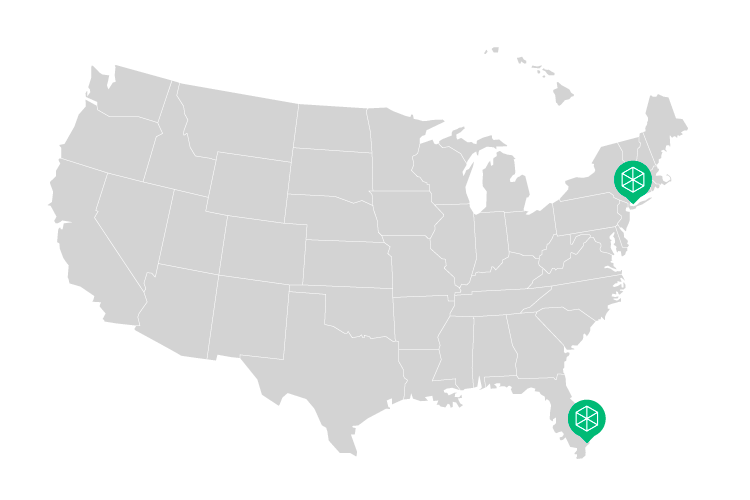
Want to know quickly if we serve your area with our storage services? And how quickly we can pick up your items? Check out our storage locations or give us a call (for the fastest answer).
 Call us
 Schedule a call
 WhatsApp